

Samsung Washer Repair in Roanoke, VA
Power fluctuations from Roanoke's seasonal storms and winter weather events can strain Samsung washer electronics and motors over time, making reliable repair access essential when issues arise. Drake Appliance Repair connects you with independent local repair providers who service Samsung washers throughout Roanoke, including neighborhoods like South Roanoke and Grandin Village. Getting your washer back in working order quickly means less disruption to your household routine.
Samsung Washer Repair for Roanoke Homeowners
Roanoke's water supply and weather patterns create unique demands on home appliances, and Samsung washers are no exception. The region experiences seasonal thunderstorms and occasional ice storms that can introduce power fluctuations into household circuits, stressing the electronic controls and motors that modern Samsung washers depend on. Over time, these electrical variations wear down components, leading to mid-cycle failures, drainage issues, or unresponsive controls. When your Samsung washer stops working—whether it's mid-load or refuses to start—the repair becomes urgent, especially for busy households in neighborhoods like South Roanoke and Beechwood Gardens where downtime quickly disrupts the week.
Drake Appliance Repair connects Roanoke homeowners with independent local providers who specialize in Samsung Washer Repair and understand the specific failure patterns these machines develop. Rather than guessing or replacing parts unnecessarily, the providers in this network diagnose the root cause—whether it's a faulty door latch, failed pump, or control board issue—and repair only what's broken. They handle follow-up communication and stand behind their work, so you're not left wondering if the problem will resurface. When your Samsung washer needs attention, reaching a qualified local provider fast is the difference between a minor fix and extended laundry backup.
Common Samsung Washer Error Codes
Samsung documents these twelve codes most often on washers. Seven typically trace to something simple — a blockage, a latch, a setting — and five to a component that needs replacing.
Samsung Washer 4C
Often clearable without a technician
What it means: The washer asked for water and did not get what it expected, so it has stopped rather than run a cycle dry. Samsung shows this as 4C on newer panels, 4E on older ones and nF on some models — one fault, three displays.
Why it happens: Almost always something before the machine rather than inside it: a supply tap not fully open, a kinked fill hose behind the unit, or the small mesh screens where the hoses meet the washer silted up with scale and grit.
What you can check: Check both taps are fully open, then pull the machine out far enough to see the fill hoses are not kinked. If that looks fine, turn the taps off, unscrew the hoses at the machine end and look at the inlet screens for debris.
When to call someone: If the supply is good and the screens are clear, the inlet valve on the machine is next, and that is where it stops being an owner check.
Samsung Washer Ub
Often clearable without a technician
What it means: The load has gone off balance in the tub and the washer will not spin it at speed, because an unbalanced drum at spin speed can damage the machine.
Why it happens: Usually one heavy item on its own — a towel, a bath mat, a single pair of jeans — or a load that has twisted into a rope on one side of the drum.
What you can check: Open the door, redistribute the load by hand and restart the spin. Adding a couple of similar-weight items often settles it; washing one heavy item alone rarely spins well.
When to call someone: If it trips on every load including well-balanced ones, the suspension or the sensor reading the drum may need looking at.
Samsung Washer 4E
Often clearable without a technician
What it means: The same not-filling fault as 4C, shown as 4E on older Samsung panels.
Why it happens: A closed or partly closed tap, a kinked fill hose, or blocked inlet screens where the hoses connect.
What you can check: Work from the wall in: taps fully open, hoses unkinked, then the inlet screens at the machine end.
When to call someone: If water reaches the machine freely and it still will not fill, the inlet valve needs testing.
Samsung Washer SE
Often clearable without a technician
What it means: Water is not leaving the machine at the rate the cycle expects, or is not leaving at all. Shown as 5E, SE, 5C or nd depending on the panel.
Why it happens: The debris filter at the bottom front catches coins, hair grips and lint and eventually packs solid. A kinked drain hose or a standpipe that cannot take the flow does the same thing from further down the line.
What you can check: Open the small flap at the bottom front, drain the residual water into a tray and clean the filter. Then check the drain hose behind the machine for kinks and that it is not pushed too far into the standpipe.
When to call someone: If the filter is clean and the hose run is clear, the drain pump itself needs testing.
Samsung Washer UE
Often clearable without a technician
What it means: The same unbalanced-load condition as Ub, shown as UE on some Samsung models.
Why it happens: A single heavy item, or a load that has bunched to one side of the drum.
What you can check: Redistribute the load by hand and restart the spin.
When to call someone: If balanced loads also trip it, the drum suspension is worth checking.
Samsung Washer dC
Often clearable without a technician
What it means: The washer cannot confirm the door is shut and locked, so it will not start or will stop mid-cycle.
Why it happens: Most often laundry caught in the door seal stopping it closing flush, or a door that has been slammed rather than pushed shut.
What you can check: Open the door fully, clear anything caught around the seal, and close it firmly without forcing it. Check the latch and the strike plate for anything obstructing them.
When to call someone: If nothing is obstructing it and the lock still will not engage, the door lock assembly is the usual cause.
Samsung Washer SUd
Often clearable without a technician
What it means: The washer has detected far more foam than the drum is designed to handle, and is pausing to clear it before continuing.
Why it happens: Usually too much detergent, or a standard detergent used in a high-efficiency machine, which foams several times more than an HE formula.
What you can check: Let the machine run its own suds-clearing routine rather than cutting the cycle short. Next load, reduce the dose and check the detergent is HE-rated if your machine needs one.
When to call someone: If it appears with a correct HE dose, something may be holding water in the drum and it is worth having checked.
Samsung Washer 5C
Often clearable without a technician
What it means: The same not-draining fault as 5E and SE, shown as 5C on some Samsung panels.
Why it happens: A packed debris filter at the bottom front, a kinked drain hose, or a standpipe that cannot take the flow.
What you can check: Clean the filter behind the flap at the bottom front, draining the residual water into a tray first, then check the hose run behind the machine.
When to call someone: If the filter is clean and the hose is clear, the drain pump needs testing.
Samsung Washer nF
Often clearable without a technician
What it means: The washer is not filling — the same fault Samsung shows as 4C and 4E on other panels.
Why it happens: A tap that is not fully open, a kinked fill hose, or the inlet screens where the hoses meet the machine blocked with scale and grit.
What you can check: Check both taps, straighten the hoses, then turn the taps off and inspect the inlet screens at the machine end.
When to call someone: If water reaches the machine freely and it still will not fill, the inlet valve is next.
Samsung Washer OE
Usually needs a technician
What it means: There is more water in the tub than there should be, so the washer has stopped filling and is trying to pump out.
Why it happens: Normally the inlet valve passing water when it has been told to close, rather than anything to do with the load or detergent.
What you can check: Turn the supply taps off at the wall so no more water can arrive. There is no owner-side fix for a valve that will not shut.
When to call someone: Promptly — a valve stuck open is a flood risk as well as an error code.
Samsung Washer 0E
Usually needs a technician
What it means: The same overfill condition as OE, shown with a zero on some panels.
Why it happens: An inlet valve letting water through when it should be closed.
What you can check: Shut the taps at the wall to stop the fill. Nothing else here is an owner check.
When to call someone: Promptly, for the same reason as OE.
Samsung Washer ddC
Often clearable without a technician
What it means: The AddWash door — the small hatch in the main door — is not registering as closed and latched.
Why it happens: It is easy to push shut without seating the catch, and a trapped sock or glove will stop it closing flush.
What you can check: Open the AddWash door fully, clear anything caught in it, and press it closed until the catch engages.
When to call someone: If it is properly shut and still reads open, the hatch switch needs checking.
Samsung Washer HE
Usually needs a technician
What it means: A fault in the heater circuit, so the machine cannot bring the wash water up to the temperature the cycle asked for.
Why it happens: A component failure rather than anything that builds up, so it usually appears without warning.
What you can check: Nothing here is an owner check — the heater and its circuit are inside the machine.
When to call someone: When you see it. Cold-water cycles may still run, but the machine is not doing what the programme selected.
Samsung Washer 5E
Often clearable without a technician
What it means: The same not-draining fault Samsung shows as SE and 5C on other panels.
Why it happens: A packed debris filter at the bottom front, a kinked drain hose, or a standpipe that cannot take the flow.
What you can check: Open the flap at the bottom front, drain the residual water into a tray and clean the filter, then check the hose run.
When to call someone: If the filter and hose are clear and it still will not drain, the drain pump needs testing.
Samsung Washer LE
Usually needs a technician
What it means: Moisture has been found somewhere inside the machine it should not be — a leak, not a setting.
Why it happens: Water escaping from a hose connection, a seal or the tub reaches a sensor that shuts the cycle down.
What you can check: Turn the supply taps off at the wall and stop using the machine. The code says water is escaping but not from where.
When to call someone: This needs a technician — tracing the source means getting behind or under the machine.
Samsung Washer 3E
Usually needs a technician
What it means: A motor fault — the drive is not behaving the way the control expects.
Why it happens: A failure in the motor or its control circuit rather than anything to do with the load or detergent.
What you can check: Nothing here is an owner check. A single power-cycle at the breaker clears a one-off glitch; a code that returns is real.
When to call someone: If it comes back after a power cycle, the motor circuit needs testing.
| Code | What it means |
|---|---|
| Ub / UE / U6 | The load is unbalanced inside the tub, so the washer cannot spin it safely. |
| 5E / SE / 5C / nd | Water is not draining at the rate it should, or is not draining at all. |
| dC / dC1 / dL | The door is not being detected as closed and locked, so the cycle will not run. |
| SUd / Sd | An over-sudsing condition has been detected and the machine is pausing to let the foam clear. |
| OE / 0E / OC | There is too much water in the washer, which normally means the inlet valve is passing water when it should be shut. |
| LE / 1C | Moisture has been detected somewhere inside the machine that it should not be, which is a leak rather than a setting. |
| HE / HC | A fault in the heater circuit, so the machine cannot bring the water up to temperature. |
| 3E / 3C | A motor fault — the drive is not behaving as the control expects. |
| tE / tC | The temperature sensor is reporting a reading outside the range the cycle allows. |
| bE2 / 6E2 | A button on the control panel is reading as stuck or continuously pressed. |
Don't see your code? Call (540) 765-2266 — we'll help you track it down.
Common Samsung Washer Problems We Fix
Won't Drain
A clogged drain filter, kinked hose, or faulty pump can leave water sitting in your drum. The local provider Drake connects you with will inspect the drain path and repair or replace the part causing the blockage.
Not Spinning
When clothes stay soaking wet after the cycle, a worn drum bearing, broken belt, or motor issue is often the culprit. Your connected provider diagnoses the mechanical fault and restores the spin function.
Leaking Water
Water pooling beneath your washer usually points to a damaged door seal, cracked tub, or loose hose connection. The independent provider you're connected with locates the leak source and performs the necessary repair.
Error Code on Display
Samsung washers display error codes—like 4C—to signal specific faults ranging from drainage problems to motor issues. The provider Drake connects you with reads the code, diagnoses the underlying cause, and fixes it.
Loud or Vibrating
Banging, grinding, or excessive shaking during the wash cycle often stems from foreign objects, unbalanced load sensing, or worn drum bearings. Your local provider investigates the noise and corrects the source.
Won't Start or Fill
If your washing machine doesn't power on or won't fill with water, the issue may involve the control board, inlet valve, or electrical connection. The independent provider you're paired with tests each component and restores operation.
Why Roanoke Homeowners Turn to Drake for Samsung Washer Repair
Samsung Washer Repair When You Need It
Local independent providers connected through Drake respond quickly to Samsung washer issues across Roanoke neighborhoods like South Roanoke and Grandin Village, minimizing downtime and getting your laundry routine back on track.
Samsung Washer Repair Done Right
Drake connects you with independent providers experienced in Samsung washer diagnostics and repair. Clear communication about what's wrong and what it costs helps you make informed decisions about your appliance.
Samsung Washer Repair You Can Trust
Independent local providers in the Drake network handle Samsung washer repairs with attention to detail, addressing the root cause rather than quick fixes so your machine runs reliably long-term.
Power Surges and Samsung Washer Motors
Roanoke's seasonal weather patterns and power fluctuations can stress appliance electronics over time. Samsung washers in homes throughout Roanoke benefit from prompt repair when electrical issues develop, preventing further motor or component damage.
How Our Repair Service Works
Tell Us About Your Samsung Washer
Contact Drake Appliance Repair and describe what's happening with your Samsung washer—whether it won't drain, won't spin, leaks, or won't start. We'll connect you with a local Roanoke provider who can schedule a time to assess your machine.
Samsung Washer Diagnosis & Assessment
The independent technician inspects your Samsung washer, tests its components, and identifies the cause—from drum bearing wear to motor or control board issues. In Roanoke, power fluctuations from seasonal storms can stress washer electronics, and our providers check for surge-related damage during diagnosis.
Repair & Follow-Up Service
Once you approve the repair plan, the technician replaces parts, restores function to your Samsung washer, and tests it to confirm proper operation. They'll answer questions about maintenance and next steps, and you'll have a direct line for any follow-up concerns.
Need appliance repair in Roanoke? Our technicians can help fast.
Call (540) 765-2266More Repairs for This Brand
Samsung Washer Repair FAQ — Roanoke, VA
Samsung Washer Repair addresses issues like drum problems, water inlet valve failures, control board malfunctions, and drainage blockages. A local provider will diagnose the specific fault, discuss repair options with you, and replace or repair the faulty component. The scope depends on whether the problem is mechanical, electrical, or plumbing-related to your washer's connection.
Drake Appliance Repair connects you with independent local providers in Roanoke who typically respond to repair requests within a day or two. Availability depends on current demand and the provider's schedule. Call or submit your request online to learn when a technician can visit your home to assess your Samsung washer.
Repair cost depends on the part that needs replacement, labor time, and service call fees set by the independent provider. Common Samsung washer issues range from inexpensive fixes to costlier component replacements. The technician will give you a detailed estimate before beginning work so you can make an informed decision.
Before the technician arrives, clear the area around your washer and note any sounds, error codes, or performance changes you've observed. Make sure the water supply valves are accessible. If your washer won't drain, empty standing water if it's safe to do so. Have your Samsung model number ready—it's on a label inside the door or behind the front panel.
Clean the detergent dispenser and rubber gasket regularly to prevent mold and odors. Don't overload the drum, use the correct detergent amount, and run a maintenance cycle monthly. Check hose connections for cracks or bulges. Avoid leaving wet clothes sitting inside after the cycle ends, which can damage internal seals over time.
Roanoke's water supply is moderately soft compared to some surrounding areas, though mineral content varies by neighborhood. Hard water minerals can still accumulate in inlet valves and fill lines over time, potentially requiring repair. Running cleaning cycles and maintaining good drainage habits help reduce mineral buildup in your Samsung washer's internal components.
Samsung Washer Repair Across Roanoke
Roanoke's water supply draws from the Carvins Cove Reservoir, which provides moderately soft water to most of the area—a quality that varies somewhat depending on your neighborhood and how the municipal system blends sources. While softer water is gentler on some appliance components, the real stress on Samsung washers in Roanoke comes from the region's electrical environment. Seasonal thunderstorms, ice storms, and tropical system remnants bring power surges and voltage swings that can wear down motor windings and damage electronic control boards over time, sometimes leaving a washer that won't spin, won't drain, or won't start at all.
Whether you live in an established neighborhood like South Roanoke or Raleigh Court, or in a newer area like Blue Ridge Park, homes throughout the region face the same electrical vulnerabilities during weather events. A sudden power fluctuation can trip a washer's sensors or burn out its drive motor without warning. Connecting with an independent local Samsung washer repair provider who understands these common failure patterns means faster diagnosis and a clearer path to getting your machine running again. Drake Appliance Repair links you to providers serving Roanoke who handle these repairs regularly and can reach you quickly when your washer needs attention.
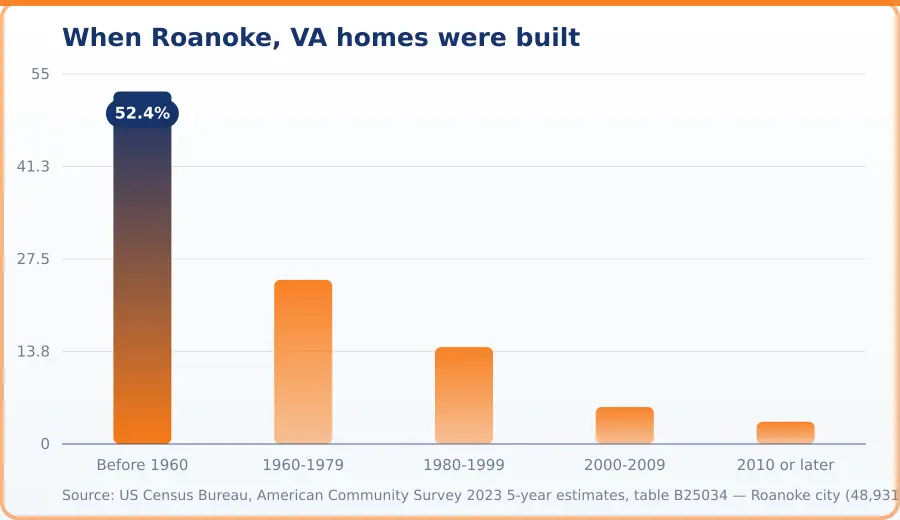
| Period | When homes were built (%) |
|---|---|
| Before 1960 | 52.4 |
| 1960-1979 | 24.4 |
| 1980-1999 | 14.4 |
| 2000-2009 | 5.5 |
| 2010 or later | 3.3 |
Source: US Census Bureau, American Community Survey 2023 5-year estimates, table B25034 — Roanoke city (48,931 housing units). Retrieved October 5, 2026.
Homeowner Safety Toolkit
Confirm Who You're Hiring in Roanoke, VA
Before you hire anyone, use these independent national resources to confirm credentials, standards, and track record.
BBB
Look up any appliance repair company's complaint history, customer reviews, and accreditation status — a free, independent check before you hire.
Check StandingISCET
NASTeC is the appliance repair industry's own national certification exam, administered by the nonprofit ISCET. It's voluntary, so it's worth asking whether your technician holds it.
About NASTeC CertificationNFPA
A poorly repaired dryer, range, or water heater is a real fire risk. The National Fire Protection Association's home safety guidance covers what to check after any appliance service.
Appliance Fire Safety TipsBook your Roanoke appliance repair today.
Call (540) 765-2266Our Roanoke, Virginia Service Area
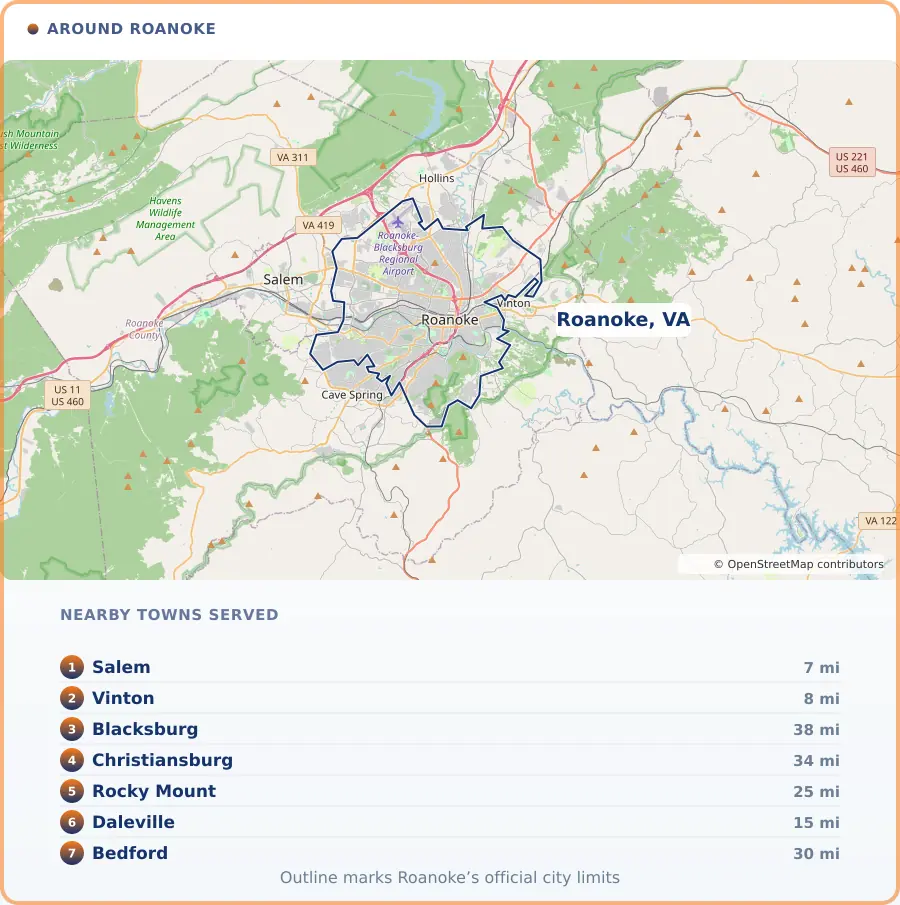
Based in Roanoke, VA, with 7 nearby communities inside the service area — near enough to reach quickly, not just listed on a map.
About Roanoke, VA
Tucked into a valley where the Blue Ridge Mountains fold into southwestern Virginia, Roanoke has long served as the region's anchor city—a role it first earned as a railroad town built around Norfolk Southern and carries forward today as a hub for medicine and higher learning. Carilion Clinic and the Virginia Tech Carilion School of Medicine give Roanoke a strong healthcare backbone, while manufacturing, education, and a growing technology sector round out an economy that also leans on steady government and service employment.
Home to roughly 100,000 residents, Roanoke is really a patchwork of distinct neighborhoods, from the historic porches of Old Southwest to the walkable shops of Grandin Village, each adding its own texture to a city that still feels close-knit, approachable, and genuinely proud of its working history.
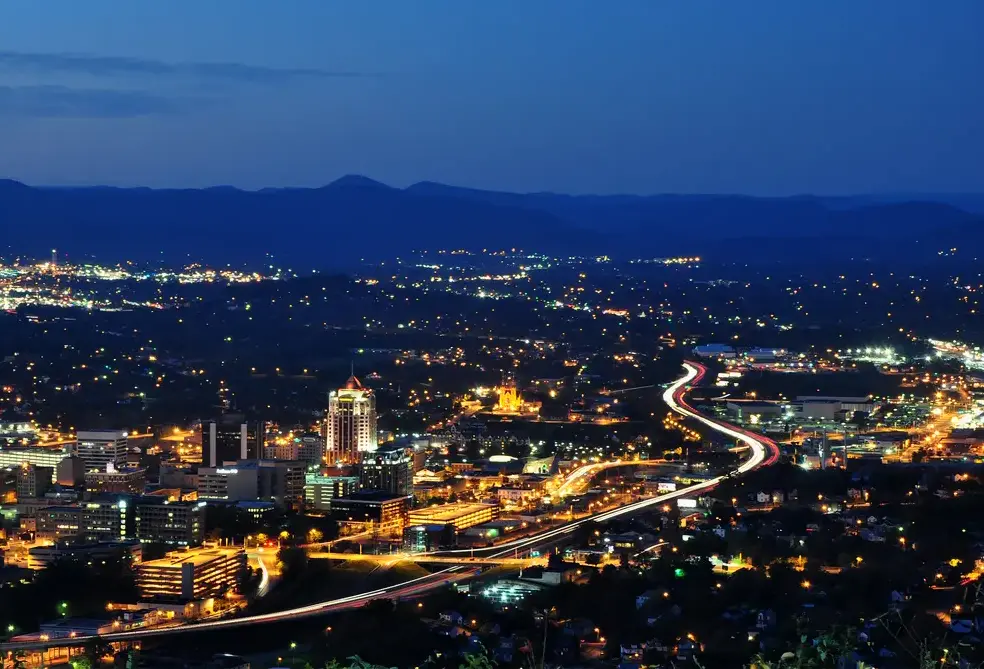
Photo: Joe Ravi, CC BY-SA 3.0